Best Compression Socks for Women Over 50: 5 Pairs We Actually Love
 Margaret Holloway roundup
 At a Glance
Discover the best compression socks for women over 50 — honest reviews, styling tips, and comfort advice from a friend who's tried them all.
Products in This Article
This post contains affiliate links. If you purchase through my links, I may earn a small commission at no extra cost to you — it helps keep Flourish & Find going, and I only ever share things I’d genuinely recommend.
I’ve been using compression socks for months and honestly, I wish someone had told me about them sooner. If your legs feel heavy and achy by afternoon, or you’ve noticed a little swelling around your ankles after a long day on your feet, you are absolutely not alone — and the best compression socks for women over 50 might just become your new best friend.
Why Compression Socks Matter for Women Over 50
Here’s something I didn’t fully appreciate until my mid-fifties: our circulation naturally changes as we get older. Veins lose a little elasticity, we may sit or stand for longer stretches, and that sluggish feeling in our legs becomes harder to ignore. For many of us, that translates to swelling, discomfort, varicose veins, or just that tired, heavy-leg feeling that makes evenings on the sofa feel like a medical necessity.
Compression socks work by applying gentle, graduated pressure — tightest at the ankle and easing up as they go higher — which encourages blood to move back up toward the heart instead of pooling in the lower legs. The result? Less swelling, better circulation, and legs that feel noticeably more comfortable.
They’re not just for people with medical conditions, either. Comfortable compression socks for older women are wonderful for travel, long days of shopping or sightseeing, gardening, or even just puttering around the house. Think of them as a little hug for your legs — a practical, caring one.
A note from one of our readers: “I was skeptical at first, but after wearing compression socks on a five-hour flight to see my grandchildren, I stepped off the plane feeling like myself instead of like I’d been folded into a suitcase. I’m a convert.” — Sandra, 63
Top 5 Compression Socks for Women Over 50
Let’s get into the good stuff. I’ve looked at hundreds of options so you don’t have to, and I’ve narrowed it down to five picks that balance quality, comfort, value, and — yes — a little bit of style.
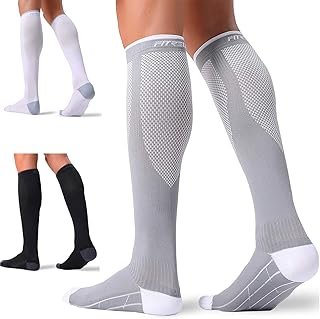
FITRELL 3 Pairs Compression Socks (20-30 mmHg)
Price: $14.99 | Rating: 4.5/5 (37,300+ reviews)
I keep coming back to FITRELL as my go-to recommendation for anyone just starting out with compression socks. At under $15 for three pairs, the price is genuinely hard to argue with — and with over 37,000 reviews averaging 4.5 stars, it’s clearly not just me who thinks so. These are a solid 20-30 mmHg medical-grade compression sock that feels supportive without being uncomfortably tight. I’ve worn them on long travel days and during my morning walks, and my legs feel markedly less tired by evening.
| Pros | Cons |
|---|---|
| Great value — 3 pairs for under $15 | Sizing can run slightly small |
| Medical-grade 20-30 mmHg compression | Limited color options |
| Comfortable for all-day wear | Not the most fashion-forward design |
| Highly rated by thousands of buyers |
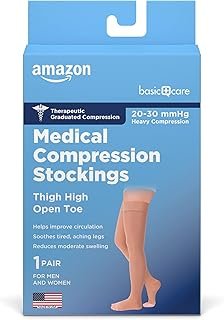
Amazon Basic Care Medical Compression Stockings (20-30 mmHg, Thigh Length)
Price: $23.39 | Rating: 4.3/5 (5,000+ reviews)
If you’ve been dealing with varicose veins, edema, or significant swelling, this is the one I’d point you toward first. These are true medical compression stockings — thigh-length, open-toe, and designed specifically for circulation support and swelling and pain relief. The open-toe design is a real bonus if you have any foot sensitivity, and the thigh-high length means you’re getting compression where you need it most. They’re a step up in price from the others on this list, but for targeted medical support, they’re worth it.
| Pros | Cons |
|---|---|
| Thigh-length for full leg coverage | Pricier than knee-high options |
| Open-toe design — great for foot sensitivity | Only available in beige |
| Specifically designed for varicose veins and edema | May feel warm in summer |
| Trusted Amazon Basic Care brand |
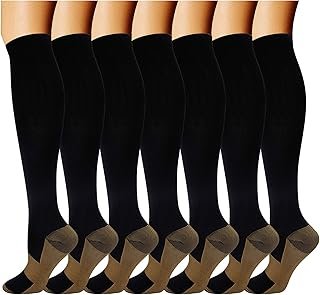
Double Couple 7 Pairs Copper Compression Socks (20-30 mmHg)
Price: $19.99 | Rating: 4.4/5 (19,200+ reviews)
Seven pairs for under $20 — now that’s what I call treating yourself practically. I love these for the sheer variety you get. Double Couple’s copper-infused compression socks come in a range of colors and patterns, which makes them my top pick if you’re looking for stylish compression socks for women who don’t want to feel like they’re wearing a medical device. The copper fiber is also naturally antimicrobial, which is a lovely bonus for everyday wear. With nearly 20,000 reviews, these clearly have a devoted following.
| Pros | Cons |
|---|---|
| 7 pairs — excellent value | Copper benefit is modest, not dramatic |
| Comes in fun colors and patterns | Some reviewers find the toe seam noticeable |
| Copper-infused for odor resistance | |
| Great for everyday and athletic wear |
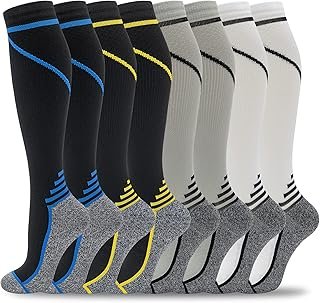
fenglaoda 8 Pairs Compression Socks (20-30 mmHg)
Price: $19.77 | Rating: 4.5/5 (16,300+ reviews)
Eight pairs for less than $20 — honestly, the math here is almost too good. Fenglaoda’s compression socks are a workhorse option that I’d happily recommend to a friend who’s on her feet all day, whether she’s a nurse, a teacher, a keen traveler, or just someone who wants to feel better by 3pm. The 20-30 mmHg compression is genuinely effective for best compression socks for circulation, and the variety of colors in each pack means you’ll always have a clean pair ready. These are comfortable compression socks for older women who want no-fuss, reliable everyday support.
| Pros | Cons |
|---|---|
| 8 pairs — best quantity value on this list | Brand is less well-known |
| 4.5-star rating with 16,000+ reviews | Sizing chart needs careful attention |
| Great for nurses, travelers, and daily wear | |
| Multiple colors included |
Bluemaple 6 Pack Copper Compression Socks (Best for Circulation)
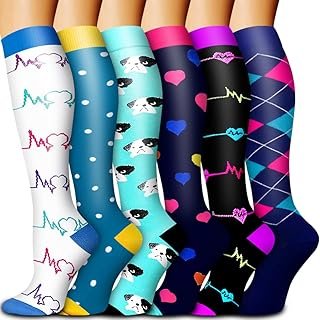
Price: $19.95 | Rating: 4.5/5 (78,600+ reviews)
I saved this one for last because those numbers stopped me in my tracks: over 78,600 reviews at 4.5 stars. That’s not a fluke — that’s a genuinely beloved product. Bluemaple’s copper compression socks are my pick for the best compression socks for circulation overall, and the sheer volume of happy customers speaks for itself. They’re soft, they hold their shape wash after wash, and the copper-infused fabric keeps things fresh even on long days. If you’re buying your first pair and want to start with something tried and truly tested, this is it.
| Pros | Cons |
|---|---|
| 78,600+ reviews — most popular on this list | 6 pairs, not 7 or 8 like competitors |
| Consistently high 4.5-star rating | Copper benefit is subtle |
| Soft, durable, holds shape well | |
| Excellent for circulation and everyday wear |
Key Features to Look for in Compression Socks
Now that we’ve met our top picks, let’s talk about what actually matters when you’re shopping. Not all compression socks are created equal, and a few key details can make the difference between a pair you love and a pair that ends up in the back of your drawer.
- Compression level: Most everyday socks are 15-20 mmHg (mild) or 20-30 mmHg (moderate, medical-grade). For swelling, varicose veins, or travel, 20-30 mmHg is usually the sweet spot.
- Length: Knee-high is the most common and easiest to wear. Thigh-high gives more coverage if you have swelling higher up the leg.
- Material: Look for breathable blends with a little spandex for stretch. Copper-infused fabrics add odor resistance.
- Toe style: Closed toe is standard. Open toe works beautifully if you have foot sensitivity or want to wear sandals.
- Sizing: Always measure your calf circumference and ankle, not just your shoe size. This is the most common mistake, and it matters more than you’d think.
How to Choose the Right Compression Level
This is one of those things that feels overwhelming at first, but it’s really quite simple once you know the basics. Here’s a quick guide we can use together:
- 8-15 mmHg (light): Good for mild tiredness and minor swelling. Fine for everyday sitting or light activity.
- 15-20 mmHg (mild): Great for travel, standing all day, or mild varicose veins.
- 20-30 mmHg (moderate/medical): The most commonly recommended level for compression socks for swelling and pain relief, varicose veins, post-surgery recovery, and pregnancy. All five picks in this roundup fall here.
- 30-40 mmHg (firm): Usually prescribed by a doctor for more serious vascular conditions. I’d always recommend checking with your physician before going this high.
If you’re unsure, 20-30 mmHg is a safe and effective starting point for most of us. And if you have any existing circulatory conditions, diabetes, or peripheral artery disease, please do have a quick chat with your doctor before you start wearing medical compression socks for women — better safe than sorry, and they’ll likely be delighted you’re being proactive.
Styling Tips: Making Compression Socks Look Great
Oh, I know what you might be thinking — “Margaret, they’re going to look medical and frumpy.” And I hear you! But here’s the thing: stylish compression socks for women have come a long way, and with a few simple tricks, nobody needs to know they’re doing double duty.
- Embrace the pattern: The Double Couple and fenglaoda sets both come in fun colors and prints. Lean into it! A bold geometric sock peeking out above a boot is a look, not a liability.
- Pair with ankle boots or tall boots: Knee-high socks disappear completely under boots, so you get all the benefit with zero visibility.
- Match to your outfit: Dark socks with dark trousers, neutral socks with lighter pants. Simple.
- Wear them under wide-leg trousers: Nobody will ever see them, and your legs will thank you all day long.
- Layer with trouser socks: If you prefer a dressier look, wear a thin trouser sock on top for a polished finish.
We don’t have to choose between feeling good and looking good — we deserve both.
Common Questions About Compression Socks Answered
How long should I wear them each day? Most people wear compression socks from the time they get up until they go to bed. Put them on first thing in the morning, before you’ve been on your feet and before any swelling starts. Take them off at night.
Can I wear them to bed? Generally, no — unless your doctor specifically recommends it. At night, your legs are elevated and your circulation works differently. Wearing them to bed can actually interfere with that process.
How do I put them on easily? This is a real question, and I appreciate it! Roll the sock down to the heel, slip it over your foot, then gradually unroll it up your leg. A little body lotion on your legs the night before (not right before — that makes it slippery) can help. There are also compression sock donning aids on Amazon if you have limited hand strength or mobility.
How often should I wash them? After every wear, ideally. Hand wash or machine wash on gentle, and air dry to preserve the elastic. Treating them gently means they’ll last much longer.
Are they covered by insurance? Medical compression socks for women prescribed by a doctor are sometimes covered. It’s worth asking your insurance provider — you might be pleasantly surprised.
Find Your Perfect Pair Today
There’s something genuinely lovely about discovering a simple thing that makes your daily life more comfortable. The best compression socks for women over 50 aren’t glamorous, but they’re one of those quiet little investments that pays off every single day — on your morning walk, on a long flight to visit family, or just making it to dinner without your feet aching.
Whether you start with the crowd-favorite Bluemaple, stock up with the fenglaoda 8-pack, or go for the targeted medical support of the Amazon Basic Care thigh-highs, you’re making a genuinely kind choice for your body. And that’s always worth celebrating.
Which of these would you try first? I’d love to hear how you get on — drop a comment below and let’s chat!