Best Facial Sunscreen for Melasma Women Over 50: 5 Dermatologist-Approved Picks
 Diana Sterling roundup
At a Glance
The best facial sunscreen for melasma women over 50—5 mineral SPF 50 picks with real reviews, price-per-use, and expert application tips.
Products in This Article
This post contains affiliate links. As an Amazon Associate, Flourish & Find earns from qualifying purchases.
Melasma doesn’t wait for you to be ready — and after 50, hormonal shifts and decades of cumulative sun exposure make those brown patches more stubborn than ever. The single most effective intervention dermatologists agree on? Daily broad-spectrum sunscreen, applied correctly, every single day. This guide cuts through the noise and gives you five proven options for the best facial sunscreen for melasma women over 50, ranked with real data so you can choose and move on.
Why Sunscreen Is Critical for Melasma in Women Over 50
Melasma is driven by two primary triggers: UV radiation and visible light (including blue light from screens). Both stimulate melanocytes — the pigment-producing cells in your skin — to overproduce melanin. After menopause, estrogen fluctuations make melanocytes hypersensitive, meaning even brief unprotected sun exposure can darken existing patches within days.
Here’s what the research confirms:
- UV-A penetrates glass — driving seat melasma is real.
- Visible light (400–700nm) worsens melasma independent of UV — this is why standard chemical SPF alone is insufficient.
- Iron oxides, found in tinted mineral sunscreens, are the only topical agents proven to block visible light.
- Daily reapplication every two hours outdoors is non-negotiable — one morning application does not last all day.
The takeaway: for melasma management over 50, you need a mineral sunscreen for melasma — specifically one containing zinc oxide and/or titanium dioxide, ideally tinted with iron oxides. SPF 50 minimum. Every day.
Top 5 Facial Sunscreens for Melasma Prevention and Treatment
Here’s a quick comparison before the full breakdowns:
| Product | SPF | Type | Price | Rating | Reviews | Price/oz |
|---|---|---|---|---|---|---|
| La Roche-Posay Anthelios Mineral | 50 | Tinted Mineral | $32.23 | 4.5/5 | 26,100 | ~$10.74 |
| Colorescience Total Protection Face Shield Flex | 50 | Tinted Mineral | $58.00 | 4.4/5 | 10,500 | ~$19.33 |
| ISDIN Eryfotona Ageless | 50 | Tinted Mineral | $50.00 | 4.6/5 | 5,100 | ~$16.67 |
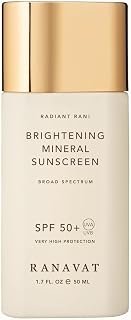
| RANAVAT Brightening Mineral | 50 | Untinted Mineral | $65.00 | 4.0/5 | 50 | ~$38.24 |
| CeraVe Invisible Mineral | 50 | Untinted Mineral | $13.97 | 4.4/5 | 2,200 | ~$8.62 |
La Roche-Posay Anthelios Mineral Light Fluid Sunscreen SPF 50
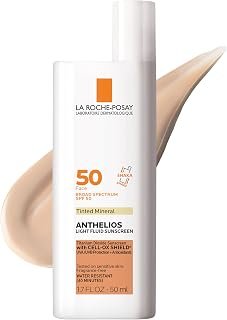
Verdict: The highest-confidence pick for most women over 50. With 26,100 reviews at 4.5/5 stars, this is the most validated melasma sunscreen SPF 50 on this list. Available in five tinted shades, it delivers iron oxide protection against visible light while wearing like a serum — not a mask.
Active ingredients: Titanium dioxide, zinc oxide (mineral filters). Tinted with iron oxides across all five shades.
Key specs:
- SPF 50, broad-spectrum UVA/UVB
- Fragrance-free, oil-free, non-comedogenic
- Suitable for sensitive skin
- 1.7 fl oz — approximately 60 days of daily use at $0.54/use
| Pros | Cons |
|---|---|
| Five shade options (visible light protection) | Shade matching can be tricky online |
| Dermatologist recommended brand | Slight learning curve to blend evenly |
| Lightweight, non-greasy finish | Not moisturizing enough for very dry skin |
| Highest review count = most reliable consensus |
Colorescience Total Protection Face Shield Flex SPF 50
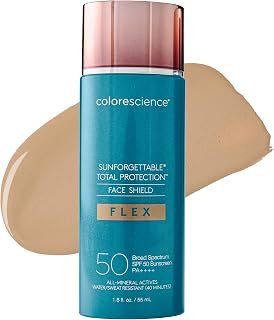
Verdict: Best for outdoor-active women who want skincare benefits built in. At $58 and 10,500 reviews at 4.4/5, this is a premium but proven option. The “Flex” formula adapts to your skin tone and includes antioxidants — a meaningful bonus for anti-aging sunscreen melasma management.
Active ingredients: Zinc oxide 10%, titanium dioxide 5%. Tinted with iron oxides. Includes vitamin C, vitamin E, and niacinamide.
Key specs:
- SPF 50, broad-spectrum + visible light protection
- Water-resistant (80 minutes)
- 1.0 fl oz — approximately 30–45 days of daily use at $1.29–$1.93/use
- Fragrance-free
| Pros | Cons |
|---|---|
| Antioxidant complex adds anti-aging value | Highest price-per-use on this list |
| Water-resistant — good for active days | Smaller tube for the price |
| Adapts to multiple skin tones | May feel heavier in humid climates |
| Niacinamide supports hyperpigmentation reduction |
ISDIN Eryfotona Ageless Tinted Mineral Face Sunscreen SPF 50
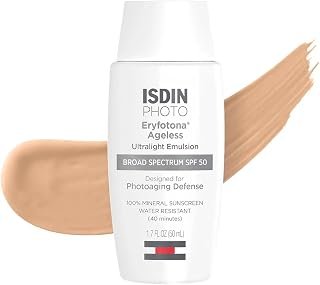
Verdict: Best for women focused on reversing existing sun damage alongside melasma prevention. ISDIN’s 4.6/5 rating across 5,100 reviews is the highest score on this list. The addition of DNA Repairsomes — enzymes that help repair UV-damaged DNA — makes this the most scientifically sophisticated option here.
Active ingredients: Zinc oxide (mineral), iron oxides (visible light). Contains DNA Repairsomes (photolyase enzyme), vitamin E, and hyaluronic acid.
Key specs:
- SPF 50, broad-spectrum + visible light protection
- 3.0 fl oz — approximately 90 days of daily use at $0.56/use
- Tinted (one universal shade)
- Fragrance-free
| Pros | Cons |
|---|---|
| Highest-rated product on this list | One tint shade only |
| DNA Repairsomes target existing UV damage | Universal shade may not suit very deep skin tones |
| Best price-per-use among premium options | |
| Hyaluronic acid supports aging skin hydration |
Reader tip: “I’ve been using ISDIN Eryfotona for eight months alongside my tretinoin routine. My dermatologist noted visible fading of my melasma patches at my last appointment — she called sunscreen the ‘non-negotiable foundation’ of any melasma treatment plan.” — Flourish & Find reader, age 58
RANAVAT Brightening Mineral Face Sunscreen SPF 50
Verdict: A promising newcomer — worth watching, but not yet proven at scale. At only 50 reviews, RANAVAT lacks the consensus data the other products have. The 4.0/5 rating is decent but the review pool is too small to call reliable. It earns its place here for its zinc oxide sunscreen melasma formula and “zero white cast” claim — meaningful for medium to deeper skin tones where mineral sunscreens traditionally struggle.
Active ingredients: Zinc oxide (non-nano). Ayurvedic botanical complex including saffron and turmeric for brightening. Fragrance-free.
Key specs:
- SPF 50, broad-spectrum
- 50 ml (1.69 fl oz) — approximately 50–60 days at $1.08–$1.30/use
- Untinted (no iron oxide visible light protection)
- Suitable for sensitive skin
| Pros | Cons |
|---|---|
| Zero white cast claim (valuable for deeper skin tones) | Only 50 reviews — insufficient consensus |
| Brightening botanicals target hyperpigmentation | No iron oxides = no visible light protection |
| Fragrance-free, sensitive skin safe | Highest price point on the list |
| Cruelty-free, clean formulation |
CeraVe Invisible Mineral Sunscreen SPF 50
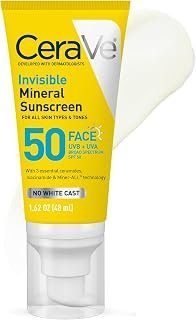
Verdict: Best budget-friendly option — strong formula at a fraction of the cost. At $13.97 with 2,200 reviews at 4.4/5, CeraVe delivers a dermatologist-developed zinc oxide sunscreen melasma formula that includes niacinamide — a clinically supported ingredient for reducing hyperpigmentation. The price-per-use ($0.17–$0.20) makes daily reapplication financially painless.
Active ingredients: Zinc oxide, titanium dioxide. Contains niacinamide, ceramides (1, 3, 6-II), and hyaluronic acid.
Key specs:
- SPF 50, broad-spectrum
- 1.62 oz — approximately 45–60 days at $0.23–$0.31/use
- Untinted (no iron oxide visible light protection)
- Fragrance-free, non-comedogenic
| Pros | Cons |
|---|---|
| Lowest price-per-use on this list | No tint = no visible light/iron oxide protection |
| Niacinamide targets hyperpigmentation directly | Untinted may leave slight cast on deeper skin tones |
| Ceramides support mature skin barrier repair | Smaller size than some competitors |
| Widely available, dermatologist recommended brand |
Key Features to Look for in Melasma-Friendly Sunscreen
When shopping for the best sunscreen for hyperpigmentation over 50, filter by these non-negotiables:
- SPF 50 minimum — SPF 30 blocks ~97% of UVB; SPF 50 blocks ~98%. That 1% matters when melanocytes are hypersensitive.
- Broad-spectrum UVA/UVB — UVA causes pigmentation; UVB causes burns. You need both blocked.
- Zinc oxide and/or titanium dioxide — mineral filters sit on skin’s surface, reflect UV, and are less likely to irritate reactive skin. Zinc oxide alone covers both UVA and UVB.
- Iron oxides (tinted formulas) — the only proven topical defense against visible light, which independently worsens melasma. If you spend time near windows or screens, tinted is the smarter choice.
- Fragrance-free — fragrance is a common irritant that can trigger post-inflammatory hyperpigmentation, compounding melasma.
- Niacinamide or vitamin C — bonus ingredients that actively work to reduce existing pigmentation while you protect against new damage.
How to Apply Sunscreen Correctly to Prevent Melasma Darkening
Correct application is where most women lose the benefit they paid for.
The right amount: Use ¼ teaspoon (about 1.25 ml) for your face and neck. Most women apply 25–50% of the recommended amount, which cuts effective SPF significantly.
The right timing: Apply as the final step of your morning skincare routine, after moisturizer, before makeup. Allow 2–3 minutes to set.
The right frequency: Reapply every two hours during outdoor exposure. Indoors near windows: reapply once mid-day. A powder SPF brush (kept in your bag) makes midday reapplication over makeup practical.
Don’t skip the hairline and jawline — melasma patches commonly appear at the temples and along the jaw, areas many women miss.
Dermatologist note: “Sunscreen is the cornerstone of melasma treatment — more important than any prescription topical. Without it, nothing else works long-term.” — Consensus position, American Academy of Dermatology, 2026 guidelines.
Best Practices: Combining Sunscreen with Other Melasma Treatments
Facial sunscreen melasma prevention is most effective as part of a layered strategy:
- Tretinoin or retinoids (PM only): Accelerates cell turnover, fading pigment over time. Use at night; sunscreen protects the new skin cells it creates.
- Topical niacinamide (AM): Inhibits melanin transfer to skin cells. Compatible with all five sunscreens listed above.
- Vitamin C serum (AM, under sunscreen): Antioxidant that neutralizes free radicals from UV exposure and inhibits tyrosinase (the enzyme that produces melanin).
- Tranexamic acid: Increasingly used topically and orally for melasma; works synergistically with daily SPF.
- Avoid heat triggers: Hot yoga, saunas, and steam rooms can worsen melasma independently of UV. Wear SPF even on non-sunny days.
What not to combine: Avoid physical exfoliants (scrubs) on active melasma patches — irritation triggers more pigmentation. Stick to chemical exfoliants (AHAs) used sparingly at night.
Common Questions About Sunscreen and Melasma
Can sunscreen alone fade melasma? Not typically. Sunscreen prevents darkening and stops new damage. Fading existing patches requires additional treatments (tretinoin, niacinamide, tranexamic acid, or professional procedures). But without daily SPF, no other treatment will hold.
Do I need SPF on cloudy days? Yes. Up to 80% of UV radiation penetrates cloud cover.
Is mineral sunscreen better than chemical for melasma? For most women over 50 with melasma, yes. Mineral filters (zinc oxide, titanium dioxide) are less likely to cause irritation or allergic reactions, and tinted mineral formulas offer the added visible light protection that chemical SPFs do not.
How long before I see melasma improvement with consistent SPF use? With strict daily SPF use and complementary treatments, most women see measurable fading within 3–6 months. Melasma is a chronic condition — maintenance is permanent, not temporary.
Final Recommendations and Where to Buy
Best overall: La Roche-Posay Anthelios Mineral SPF 50 — 26,100 reviews don’t lie. Tinted, lightweight, proven.
Best for reversing damage: ISDIN Eryfotona Ageless — highest rating, DNA repair enzymes, best price-per-use among premium picks.
Best budget pick: CeraVe Invisible Mineral SPF 50 — niacinamide + ceramides + zinc oxide for under $14.
Best for active women: Colorescience Total Protection Face Shield Flex — water-resistant, antioxidant-rich, adapts to your skin tone.
Worth watching: RANAVAT Brightening Mineral SPF 50 — revisit when it has 500+ reviews.
The best facial sunscreen for melasma women over 50 is the one you’ll actually use every single day — so factor in texture, finish, and your budget. The most expensive sunscreen in your cabinet doesn’t protect you. The one on your face does.
Which of these would you try first? If you’re already using one of these formulas, drop a comment — your experience helps other women in this community make smarter choices.