Best Hair Dye for Sensitive Skin Women Over 50: 5 Gentle, Effective Picks
 Diana Sterling roundup
 At a Glance
Find the best hair dye for sensitive skin women over 50. 5 ammonia-free, gentle picks with real ratings, ingredients, and price-per-use data.
Products in This Article
This post contains affiliate links. If you purchase through our links, we may earn a small commission at no extra cost to you.
Your scalp doesn’t lie. If hair dye has ever left you with burning, itching, or a rash that lasted days, your skin is telling you something — and it’s worth listening. Finding the best hair dye for sensitive skin women over 50 isn’t just about comfort; it’s about protecting a scalp that becomes more reactive with age while still getting the gray coverage you want.
Why Hair Dye Choice Matters for Women Over 50 with Sensitive Skin
After 50, skin thins and produces less protective sebum. The scalp is no exception. This makes it more permeable to harsh chemicals — and traditional permanent dyes are loaded with them.
The three biggest offenders in conventional hair dye:
- Ammonia — Opens the hair cuticle aggressively; causes scalp irritation and strong fumes
- PPD (para-phenylenediamine) — The most common allergen in hair dye; responsible for the majority of contact dermatitis cases
- Resorcinol — A color-coupling agent linked to scalp inflammation and endocrine disruption
The good news: ammonia-free hair color for sensitive scalps has improved dramatically. Today’s formulas deliver full gray coverage without the chemical assault. The five picks below are all ammonia-free, have verified Amazon ratings from real buyers, and are priced under $18.
Top 5 Best Hair Dyes for Sensitive Skin
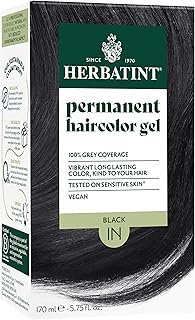
Herbatint 1N Black Permanent Hair Dye
Verdict: The most reviewed gentle hair dye in this roundup — 14,100 ratings at 4.3/5 — and one of the longest-standing hypoallergenic hair color over 50 options on the market.
Herbatint has been formulated without ammonia, alcohol, or parabens since the brand’s founding. The formula uses eight herbal extracts — including aloe vera, walnut, and white oak — to condition the scalp during color processing. At $13.99 for 5.75 fl oz, price-per-use comes in around $7 if you’re touching up roots every 6 weeks.
Key ingredients: Aloe barbadensis leaf juice, Juglans regia (walnut) extract, Quercus robur (white oak) bark extract. No PPD alternative listed — uses aminophenol derivatives with lower sensitization rates.
| Pros | Cons |
|---|---|
| 14,100+ reviews — strong confidence base | Shade range smaller than drugstore brands |
| Ammonia-free, alcohol-free, vegan | Processing time: 40 minutes |
| Herbal extracts condition while coloring | Black is a permanent commitment — hard to lighten |
| 100% gray coverage claimed |
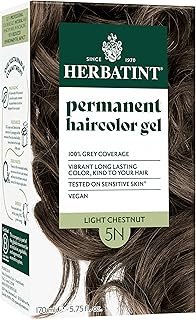
Herbatint 5N Light Chestnut Permanent Hair Dye
Verdict: The same trusted Herbatint formula in a warmer, more versatile shade — ideal if you’re transitioning from darker color or want something that reads naturally against graying temples.
Light Chestnut (5N) sits in the mid-brown range, which tends to be the most flattering for women over 50 with cool or neutral undertones. Same 14,100-review pool as the 1N (Herbatint reviews aggregate across shades), same 4.3/5 rating. At $17.99, it’s $4 more than the black shade — still under $9 per use on a 6-week schedule.
Key ingredients: Identical herbal base to 1N — aloe, walnut, white oak. The lighter shade requires a slightly lower developer concentration, which is gentler on the scalp.
| Pros | Cons |
|---|---|
| Warmer tone flatters mature complexions | $4 more than the black shade |
| Same gentle formula as 1N | Not ideal for very dark starting hair without pre-lightening |
| Conditions during processing | |
| Vegan and cruelty-free |
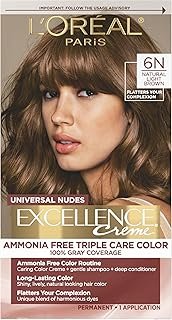
L’Oreal Paris Excellence Universal Nudes Permanent Hair Color
Verdict: The highest-rated product in this roundup at 4.5/5 across 3,000 reviews, and the best value at $13.97. This is the pick for women who want a proven drugstore brand reformulated without ammonia.
The Universal Nudes line was developed specifically to work across a wide range of natural hair tones — a significant advantage for gentle hair dye for mature women whose base color may be a patchwork of original pigment and gray. The 6N Natural Light Brown shade is particularly forgiving. The kit includes a conditioning serum and a scalp-protecting applicator.
Reader tip from Amazon reviewer “SilverFox52”: “I’ve been using this for six months after years of scalp reactions to other brands. Zero burning, full coverage on my stubborn grays at the temples. I do a patch test every single time — don’t skip that step.”
| Pros | Cons |
|---|---|
| Highest rating in this roundup (4.5/5) | Newer product — 3,000 reviews vs. 14,000+ for Herbatint |
| Best price: $13.97 | Kit includes plastic waste (gloves, applicator) |
| Includes conditioning serum | |
| Works across diverse hair tones |
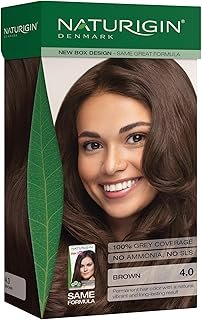
Naturigin Permanent Hair Dye – 4.0 Brown
Verdict: The most natural-ingredient-forward option in this group. If you’re looking for a natural hair dye for sensitive scalp women that goes beyond simply removing ammonia, Naturigin is the serious contender.
Naturigin is certified by the Nordic Ecolabel and uses plant-infused ingredients including argan oil and aloe vera. It’s free from ammonia, parabens, resorcinol, and silicones. The 4.0 Brown shade is a rich, deep brown with neutral undertones — excellent for hair dye for sensitive skin and gray coverage on medium to dark hair. At $15.90 for 1,600 reviews at 4.1/5, the rating is slightly lower, but many critical reviews cite shade expectation rather than skin reactions.
Key ingredients: Argan oil, aloe vera, free from resorcinol (a significant differentiator from most permanent dyes).
| Pros | Cons |
|---|---|
| Resorcinol-free — rare in permanent dye | 4.1/5 is the lowest rating here |
| Nordic Ecolabel certified | Smaller U.S. distribution — occasionally out of stock |
| Silicone-free formula | Fewer shade options |
| Argan oil conditioning |
Garnier Olia Ammonia-Free Permanent Hair Color
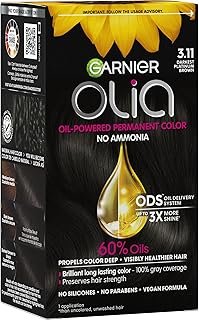
Verdict: The most reviewed product in this roundup at 19,200 ratings and 4.4/5 — that volume of feedback gives it the strongest real-world confidence. At $9.47, it’s also the most affordable, making it the best choice if you’re new to ammonia-free hair color for a sensitive scalp and want to test the waters without committing to a premium price.
Garnier Olia’s signature is its oil-powered developer, which uses 60% oils (including flower oils) instead of water as the base. This means the developer is inherently more conditioning, less stripping, and produces less scalp heat during processing. The 3.11 Darkest Platinum Brown is a sophisticated cool-toned brown that works well for women with silver or ash-toned gray.
Key ingredients: Flower oil blend (including camellia and sunflower), no ammonia. Note: does contain PPD — patch test is non-negotiable.
| Pros | Cons |
|---|---|
| 19,200+ reviews — highest confidence in roundup | Contains PPD — patch test required |
| Lowest price: $9.47 (~$4.75/use on 6-week schedule) | Oil formula can feel heavy on fine hair |
| Oil-powered developer is gentler than water-based | |
| 4.4/5 rating with massive review base |
Key Ingredients to Look For in Gentle Hair Color
When evaluating hypoallergenic hair color over 50, read the ingredient list before the marketing copy. Here’s what matters:
Look for:
- Aloe vera — soothes and hydrates the scalp during processing
- Argan or camellia oil — conditions and reduces cuticle damage
- Aminophenol derivatives — lower sensitization rates than PPD (though not zero)
Avoid or patch-test carefully:
- PPD (para-phenylenediamine) — present in most permanent dyes including Garnier Olia; the leading cause of hair dye allergies
- Ammonia — all five picks above are ammonia-free
- Resorcinol — Naturigin is the only pick here that’s fully resorcinol-free
- Parabens — Herbatint and Naturigin are both paraben-free
How to Prepare Your Scalp Before Coloring
Do a patch test. Every time. Sensitization to hair dye can develop at any point — even if you’ve used the same product for years without issue. Apply a small amount of mixed dye behind your ear or in the crook of your elbow 48 hours before coloring.
Three days before coloring:
- Stop using clarifying shampoos — they strip the scalp’s protective barrier
- Don’t scratch or vigorously massage your scalp
- Apply a thin layer of coconut or olive oil along your hairline to create a buffer
Day of coloring:
- Do not wash your hair immediately before — natural oils provide protection
- Apply petroleum jelly along your hairline, ears, and neck
Application Tips for Sensitive Skin and Mature Hair
Mature hair is typically more porous and drier than younger hair, which means it absorbs color faster and can become over-processed more easily.
Practical adjustments:
- Reduce processing time by 5 minutes on your first use of any new formula
- Apply to roots first, then work down the shaft — roots process faster due to scalp heat
- Use cool or lukewarm water to rinse — hot water increases scalp absorption of remaining chemicals
- Follow with a color-safe conditioner immediately — don’t skip this step on mature hair
- Space colorings at least 6 weeks apart — more frequent application increases cumulative irritation risk
“The biggest mistake I see women make is coloring too frequently because they’re anxious about roots. A root touch-up product between full colorings is far gentler than full-head applications every 4 weeks.” — common advice from professional colorists working with sensitive-scalp clients
Common Questions About Hair Dye and Sensitivity
Is semi-permanent hair color safer for sensitive skin? Generally, yes. Semi-permanent hair color for sensitive skin skips the developer entirely or uses a very low-volume developer, which means less chemical penetration. The trade-off: it fades in 4–8 weeks and provides less gray coverage on resistant grays.
Can I be allergic to ammonia-free dye? Yes. Removing ammonia reduces irritation but doesn’t eliminate allergy risk. PPD is the primary allergen, and it’s present in most permanent dyes regardless of ammonia content. Always patch test.
What’s the difference between “sensitive” and “hypoallergenic” on labels? Neither term is regulated. “Hypoallergenic” means the manufacturer has reduced common allergens — it does not mean reaction-free. Treat both claims as marketing language and evaluate the actual ingredient list.
Does gray hair absorb dye differently? Yes. Gray and white hair lacks melanin, which makes it more porous and can cause it to absorb color unevenly or appear brassy. Choosing a shade with neutral or ash tones (marked “N” or “A” in shade codes) helps compensate.
Find Your Perfect Shade: Final Recommendations and Where to Buy
| Product | Price | Rating | Reviews | Best For |
|---|---|---|---|---|
| Garnier Olia 3.11 | $9.47 | 4.4/5 | 19,200 | Budget pick, high confidence |
| L’Oreal Excellence 6N | $13.97 | 4.5/5 | 3,000 | Highest rated, versatile tones |
| Herbatint 1N Black | $13.99 | 4.3/5 | 14,100 | Dark hair, proven track record |
| Herbatint 5N Chestnut | $17.99 | 4.3/5 | 14,100 | Warm mid-brown, herbal formula |
| Naturigin 4.0 Brown | $15.90 | 4.1/5 | 1,600 | Most natural formula, resorcinol-free |
My direct recommendations by priority:
- If you’ve had reactions before and want maximum caution: Naturigin — it’s the only resorcinol-free permanent option here
- If you want the most proven formula at the best price: Garnier Olia — 19,200 reviews don’t lie, and $9.47 makes it easy to test
- If you want the highest rating and a trusted large brand: L’Oreal Excellence Universal Nudes at 4.5/5
- If you prefer a herbal, plant-forward formula: Either Herbatint shade depending on your target color
All five products are available on Amazon with Prime shipping. Links above are affiliate links — your price doesn’t change, and any commission helps keep this site running.
The right gentle hair dye for mature women is out there. It just requires reading past the front-of-box claims and looking at what’s actually in the formula. Patch test every time, space your colorings, and protect your scalp barrier before you start.
Which of these would you try first — or have you already found a formula that works for your sensitive scalp? The comment section is open.